
How to Care for Glazed Stoneware Bowls
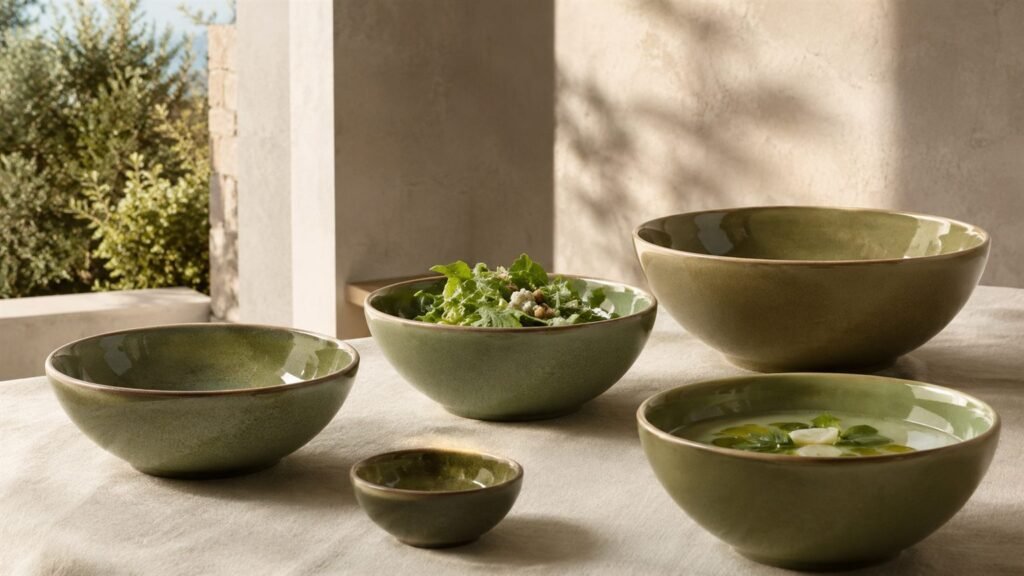
Glazed stoneware is one of the most forgiving materials you can put on a table. It shrugs off daily use, moves from fridge to microwave without complaint, and looks better surrounded by food than sitting empty on a shelf. A few simple habits keep it that way for years.
Everyday cleaning
Every Verllage bowl is dishwasher safe — a normal cycle with standard detergent is all it needs. Washing by hand works just as well: warm water, a little dish soap, and a soft sponge. There is no seasoning, oiling, or special treatment to remember.
Heat: what works and what to avoid
The microwave is fine, and so is holding a hot serving of soup or pasta straight from the stove. What stoneware does not like is sudden, extreme temperature change. Keep bowls off open flames, stovetops, and broilers, and never move one from the refrigerator into a preheated oven. Rapid swings are the only realistic way to crack a well-made stoneware piece.
About cutlery marks
With months of daily use, you may notice fine grey lines on the glaze where forks and spoons have dragged. These are traces of metal left on the glaze surface, not scratches in it. A soft scouring cleanser and a damp sponge lift them off in seconds and return the surface to new.
Glaze variation is the point
Because glazes are applied with natural variation, color depth shifts subtly across every bowl — a little more saturated at the curve, a little lighter at the center. Two bowls in the same colorway are close siblings, never identical twins. That variation is a signature of the process, not a flaw, and it is why a stack of these bowls looks alive in a way uniform dishware does not.
Storage
Both of our shapes stack cleanly. The wide Daily Bowl nests low, so a set of six takes about the height of a cereal box; the Soup Bowl stacks a little taller in a smaller footprint. No padding needed between bowls for everyday cupboard storage.